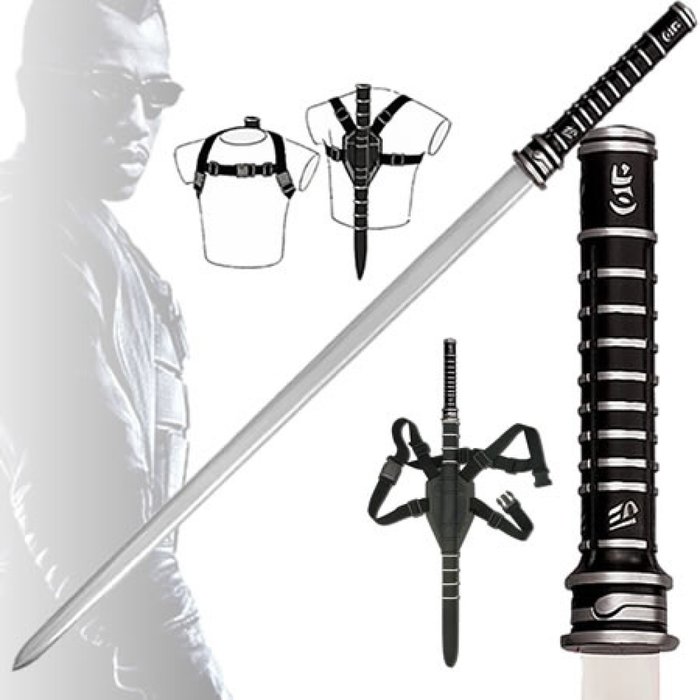
Blade And Sword 2
This article's does not adequately key points of its contents. Please consider expanding the lead to of all important aspects of the article. Please discuss this issue on the article's.
( October 2012)A blade is the portion of a, or with an edge that is designed to, or surfaces or materials. Blades are typically made from materials that are harder than those they are to be used on.
ช่องทางดาวน์โหลดตัวเกม Blade & Sword 2 ต้อนรับ CB และ OB อย่างเป็นทางการ.
Historically, humans have made blades from flaking stones such as or, and from various metal such as,. Modern blades are often made of. Blades are one of humanity's oldest tools, and continue to be used for, and other purposes.Blades work by concentrating force on the cutting edge. Certain blades, such as those used on bread knives or saws, are serrated, further concentrating force on the point of each tooth.
Contents.Uses During food preparation, knives are mainly used for slicing, chopping, and piercing.In combat, a blade may be used to slash or puncture, and may also be thrown. The function is to sever a nerve, muscle or tendon fibers, or blood vessel to disable or kill the adversary. Severing a major blood vessel typically leads to death due to. Causes wounds via the fragments' blade-like nature.Blades may be used to scrape, moving the blade sideways across a surface, as in an, rather than along or through a surface. For construction equipment such as a, the ground-working implement is also referred to as the blade, typically with a replaceable cutting edge.Physics A simple blade intended for cutting has two faces that meet at an edge. Ideally this edge would have no roundness but in practice all edges can be seen to be rounded to some degree under magnification either optically or with an electron microscope. Force is applied to the blade, either from the handle or pressing on the back of the blade.
The handle or back of the blade has a large compared to the fine edge. This concentration of applied onto the small edge area increases the exerted by the edge. It is this high pressure that allows a blade to cut through a material by breaking the bonds between the molecules/crystals/fibres/etc. In the material.
This necessitates the blade being strong enough to resist breaking before the other material gives way.Geometry. Blade of a whale knifeThe angle at which the faces meet is important as a larger angle will make for a duller blade while making the edge stronger. A stronger edge is less likely to dull from fracture or from having the edge roll out of shape.The shape of the blade is also important. A thicker blade will be heavier and stronger and stiffer than a thinner one of similar design while also making it experience more drag while slicing or piercing.
A filleting knife will be thin enough to be very flexible while a carving knife will be thicker and stiffer; a dagger will be thin so it can pierce while a camping knife will be thicker to it can be stronger and more durable. A strongly curved edge, like a will allow the user to draw the edge of the blade against an opponent even while close to the opponent where a straight sword would be more difficult to pull in the same fashion. The curved edge of an axe means that only a small length of the edge will initially strike the tree, concentrating force as does a thinner edge whereas a straight edge could potentially land with the full length of its edge against a flat section of tree. A splitting maul has a convex section to avoid getting stuck in wood where chopping axes can be flat or even concave. A or or is angled and/or weighted at the distal end so that force is concentrated at the faster moving, heavier part of the blade maximising cutting power and making it largely unsuitable for thrusting where a is thin and tapered allowing it to pierce and be moved with more agility while reducing its chopping power compared to a similarly sized sword.A serrated edge, such as on a or a, concentrates force onto the tips of the serrations which increases pressure as well as allowing soft or fibrous material (like wood, rope, bread, vegetables) to be expand into the spaces between serrations.
Whereas pushing any knife, even a bread knife, down onto a bread loaf will just squash the loaf as bread has a low (is soft) but high (loosely, can be stretched or squashed by a large proportion without breaking), drawing serrations across the loaf with little downward force will allow each serration to simultaneously cut the bread with much less deformation of the loaf. Similarly, pushing on a rope tends to squash the rope while drawing serrations across it sheers the rope fibres. Drawing a smooth blade is less effective as the blade is parallel to the direction draw but the serrations of a serrated blade are at an angle to the fibres. Serrations on knives are often symmetric allowing the blade to cut on both the forward and reverse strokes of a cut, a notable exception being which are designed to maximise cutting power while moving the blade away from the user. Saw blade serrations, for both wood and metal, are typically asymmetrical so that they cut while moving in only one direction. (Saws act by abrading a material into dust along a narrow channel, the, whereas knives and similar act by forcing the material apart.
This means that saws result in a loss of material and the serrations of a saw also serve to carry metal and out of the cut channel.)Fullers are longitudinal channels either forged into the blade or later machined/milled out of the blade though the later process is less desirable. This loss of material necessarily weakens the blade but serves to make the blade lighter without sacrificing stiffness. The same principle is applied in the manufacture of beams such as. Fullers are only of significant utility in swords. In most knives there is so little material removed by the fuller than it makes little difference to the weight of the blade and they are largely cosmetic.Materials Typically blades are made from a material that is about as, though usually harder, than the material to be cut.
Insufficiently hard blades will be unable to cut a material or will wear away quickly as hardness is related to a material's ability to resist. However, blades must also be enough to resist the dynamic load of impact and as a general rule the harder a blade the less tough (the more brittle) a material. For example, a steel axehead is much harder than the wood it is intended to cut and is sufficiently tough to resist the impact resulting when swung against a tree while a ceramic kitchen knife, harder than steel, is very brittle (has low toughness) and can easily shatter if dropped onto the floor or twisted while inside the food it is cutting or carelessly stored under other kitchen utensils. This creates a tension between the intended use of the blade, the material it is to be made from, and any manufacturing processes (such as in the case of blades that will affect a blade's hardness and toughness). A balance must be found between the sharpness and how well it can last. Methods that can circumvent this include. This method yields an edge that can hold its sharpness as well as a body that is tough.
Non-metals Prehistorically, and in less technologically advanced cultures even into modern times, tool and weapon blades have been made from wood, bone and stone. Most woods are exceptionally poor at holding edges and bone and stone suffer from brittleness making them suffer from fracture when striking or struck. In modern times stone, in the form of obsidian, is used in some medical scalpels as it is capable of being formed into an exceedingly fine edge. Are non-metallic and non-magnetic. As non-metals do not corrode they remain rust and corrosion free but they suffer from similar faults as stone and bone, being rather brittle and almost entirely inflexible.
They are harder than metal knives and so more difficult to sharpen, and some ceramic knives may be as hard or harder than some sharpening stones. For example, is harder than natural sharpening stones and is as hard as alumina sharpening stones. Is also harder than garnet sharpening stones and is nearly as hard as alumina. Both require diamond stones or silicon carbide stones to sharpen and care has to be taken to avoid chipping the blade.
As such ceramic knives are seldom used outside of a kitchen and they are still quite uncommon. Plastic knives are difficult to make sharp and poorly retain an edge. They are largely used as low cost, disposable utensils or as children's utensils or in environments such as air travel where metal blades are prohibited. They are often serrated to compensate for their general lack of sharpness but, as evidenced by the fact they can cut food, they are still capable of inflicting injury. Plastic blades of designs other than disposable cutlery are prohibited or restricted in some jurisdictions as they are undetectable by metal detectors.Metals. See also:Native was used to make blades by ancient civilizations due to its availability. Copper's comparative softness causes it to deform easily; it does not hold an edge well, and is poorly suited for working stone.
Is superior in this regard, and was taken up by civilizations. Both bronze and copper can be by hitting the metal with a hammer. With technological advancement in smelting, came to be used in the manufacturing of blades., a range of alloys made from iron, has become the metal of choice for the modern age.Various alloys of steel can be made which offer a wide range of physical and chemical properties desirable for blades. For example, surgical scalpels are often made of stainless steel so that they remain free of rust and largely chemically inert; tool steels are hard and impact resistant (and often expensive as retaining toughness and hardness requires expensive alloying materials, and, being hard, they are difficult to make into their finished shape) and some are designed to resist changes to their physical properties at high temperatures. Steels can be further heat treated to optimise their toughness, which is important for impact blades, or their hardness, which allows them to retain an edge well with use (although harder metals require more effort to sharpen).Combined materials and heat-treatments It is possible to combine different materials, or different heat treatments, to produce desirable qualities in a blade. For example, the finest Japanese swords were routinely made of up to seven sections of metals and even poorer quality swords were often made of two.
These would include soft irons that could absorb the energy of impact without fracturing but which would bend and poorly retain an edge, and hard steels more liable to shatter on impact but which retained an edge well. The combination provided a sword that would resist impact while remaining sharp, even though the edge could chip if abused. Involved together twisted bars of soft (bendable) low carbon and hard (brittle) higher carbon iron. This was done because furnaces of the time were typically able to produce only one grade or the other, and neither was well suited for more than a very limited use blade. The ability of modern steel makers to produce very high quality steels of various compositions has largely relegated this technique to either historical recreations or to artistic works. Acid etching and polishing blades made of different grades of steel can be used to produce decorative or artistic effects.Japanese sword makers developed the technique of differential hardening by covering their sword blades in different thicknesses of clay before. Thinner clay allowed the heated metal to cool faster, particularly along the edge.
Faster cooling resulted in a finer crystal structure, resulting in a blade with a hard edge but a more flexible body. European sword makers produced similar results using.Dulling Blades dull with use and abuse. This is particularly true of acute blades and those made of soft materials.
Dulling usually occurs due to contact between the blade and a hard substance such as a ceramic, stone, bone, glass or metal.The more acute the blade, the more easily it will dull. As the blade near the edge is thinner, there is little material to remove before the edge is worn away to a thicker section. Thin edges can also roll over when force is applied it them, forming a section like the bottom part of a letter 'J'. For this reason, are frequently stropped to straighten the edge.Drawing a blade across any material tends to abrade both the blade, usually making it duller, and the cut material. Though softer than glass or many types of stone used in the kitchen, steel edges can still scratch these surfaces. The resulting scratch is full of very fine particles of ground glass or stone which will very quickly abrade the blade's edge and so dull it.In times when swords were regularly used in warfare, they required frequent sharpening because of dulling from contact with rigid armor, mail, metal rimmed shields, or other swords, for example.
Particularly, hitting the edge of another sword by accident or in emergency could chip away metal and even cause cracks through the blade. Soft-cored blades are more resistant to fracturing on impact.Nail Pulls On pocket knives there will often be a groove cut in the side of the blade near the spine. This is called a nail pull, and allows the fingernail to be inserted to swing the blade out of the holder. Blade styles with typical edges shown as dark greySome of the most common shapes are listed below.( S1) A normal blade has a curving edge, and straight back.
A dull back lets the wielder use fingers to concentrate force; it also makes the knife heavy and strong for its size. The curve concentrates force on a smaller area, making cutting easier. This knife can chop as well as pick and slice.
This is also the best single-edged blade shape for thrusting, as the edge cuts a swath that the entire width of the knife can pass through without the spine having to push aside any material on its path, as a sheepsfoot or drop-point knife would.( S2) A trailing-point knife has a back edge that curves upward to end above the spine. Pacify horror game download for android. This lets a lightweight knife have a larger curve on its edge and indeed the whole of the knife may be curved. Such a knife is optimized for slicing or slashing.
Trailing point blades provide a larger cutting area, or belly, and are common on skinning knives. Clip-point blade( S4) A blade is like a normal blade with the back 'clipped'. This clip can be either straight or concave. The back edge of the clip may have a false edge that could be sharpened to make a second edge. The sharp tip is useful as a pick, or for cutting in tight places.
If the false edge is sharpened it increases the knife's effectiveness in piercing. As well, having the tip closer to the centre of the blade allows greater control in piercing. The has a clip point blade and clip-points are common on pocket knives and other folding knives.( S5) A sheepsfoot blade has a straight edge and a straight dull back that curves towards the edge at the end. It gives the most control, because the dull back edge is made to be held by fingers.
Sheepsfoot blades were originally made to trim the hooves of sheep. Their shape bears no similarity to the foot of a sheep.( S6) A Wharncliffe blade is similar in profile to a sheep's foot but the curve of the back edge starts closer to the handle and is more gradual. Its blade is much thicker than a knife of comparable size. Wharncliffes were used by sailors, as the shape of the tip prevented accidental penetration of the work or the user's hand with the sudden motion of a ship.( S7) A spey point blade (once used for neutering livestock) has a single, sharp, straight edge that curves strongly upwards at the end to meet a short, dull, straight point from the dull back.
With the curved end of the blade being closer to perpendicular to the blade's axis than other knives and lacking a point, making penetration unlikely, spey blades are common on Trapper style pocketknives for skinning fur-bearing animals. Spear-point blade( C2) A spear point blade is a symmetrically-shaped blade with a point aligned with the centerline of the blade's long axis. True spear-point blades are double-edged with a central spine, like a dagger or head. The spear point is one of the stronger blade point designs in terms of penetration stress, and is found on many thrusting knives such as the dagger. The term spear point is occasionally and confusingly used to describe small single-edged blades without a central spine, such as that of the, a small folding-blade pocket knife formerly used in sharpening quills for writing.
Pen-knife may also nowadays refer to a knifelike weapon blade pattern of some of larger pocket knife blades that would otherwise be termed drop-point designs.( C3) A needle point blade has a sharply-tapered acuminated point. It is frequently found on such as the (which had no sharpened edges) and the. Its long, narrow point reduces friction and increases the blade's penetrative capabilities, but is liable to stick in bone and can break if abused.
When the needle point is combined with a reinforced 'T' section running the length of the blade's spine, it is called a reinforced tip. One example of a knife with a reinforced tip is the.( C4).
These blades have a distinct recurved blade form and are sharpened on both sides, typically tapering to (or approximating) a symmetrical point.( C5) Referred to in English speaking countries as a 'tanto' or 'tanto point' (a corruption of the Japanese word though the tip bears no resemblance to a tantō) or a point. ('Chisel point' refers to the straightness of the edge that comprises the end of the blade, whereas 'chisel grind' usually refers to a blade ground on only one side even though chisels can be ground on one or both sides. ) It is similar to, but not the same as, some early Japanese swords that had kamasu kissaki ('barracuda tip'), a nearly straight edge at the tip whereas the typical 'tanto point' as found in the west has a straight edge. The barracuda tip sword was sharp but also fragile whereas modern tanto point are often advertised as being stronger at the tip for having nearly the whole thickness of the blade present until quite close to the end of the knife. Knife tests have shown that penetration ability of this style of blade is comparatively poor but it is possible, if the tip is strong, that more force can be applied allowing greater penetration without damaging the tip.The lower illustration is a modified tanto where the end is clipped and often sharpened.
This brings the tip closer to the centre of the blade increasing control of the blade and improves penetration potential by having a finer point and a sharpened back edge.( C6) A hawkbill blade is sharpened on the inside edge and is similar to carpet and linoleum knives. The point will tear even if the rest of the knife is comparatively dull. The from Far South-East Asia is a hawkbill knife which is held with the blade extending from the bottom of the fist and the tip facing forward.
The outside edge of a karambit may be sharp and if so may also feature a backwards facing point.( C7) An ( woman's knife) knife is a sharpened segment of a circle. This blade type has no point, and has a handle in the middle. It is good for scraping, and sometimes chopping.
The semi-circular version appears elsewhere in the world and is called a head knife. It is used in both to scrape down leather (reducing thickness, i.e. ), and to make precise, rolling cuts for shapes other than straight lines. The circular version is a popular tool for slicing. One corner is placed at the edge of the pizza and the blade is rolled across in a diameter cut.Sword patterns. Further information: andThe sharp edges of a may be either curved or straight. Curved blades tend to glide more easily through soft materials, making these weapons more ideal for slicing.
Techniques for such weapons feature drawing the blade across the opponent's body and back. For straight-edged weapons, many recorded techniques feature cleaving cuts, which deliver the power out to a point, striking directly in at the target's body, done to split flesh and bone rather than slice it. That being said, there also exist many historical slicing techniques for straight-edged weapons. Hacking cuts can be followed with a drawing action to maximize the cut's effectiveness.
For more information see or.Some weapons are made with only a single leading edge, such as the. The dusack has a 'false edge' near the tip, which only extends down a portion of the blade's backside. Other weapons have a blade that's entirely dull except for a sharpened point, like the or, which prefer thrusts over cuts. A blade cannot perform a proper cut without an edge, and so in such attacks reward no points.Some variations include:. The (undulated blade, for both psychological effect and some tactical advantage of using a non-standard blade: vibrations and easier parry).
The, found inMarks and decoration. An 'broken-back' from in Kent, inscribed in ☩ BIORHTELM ME ÞORTE ('Biorhtelm made me') and ☩ SIGEBEREHT ME AH ('Sigebereht owns me').Blades are sometimes marked or inscribed, for decorative purposes, or with the mark of either the maker or the owner. Blade decorations are often realized in in some precious metal (gold or silver).Early blade inscriptions are known from the, a sword found at bears an inscription chiseled into the bronze, stating that the blade was deposited as an offering to the by king.Blade inscriptions become particularly popular in the 12th century, based on the earlier, 9th to 11th century, tradition of the so-called. See also.References.
The swords found together with the, c. 1600 BC.The sword developed from the knife or dagger. A knife is unlike a in that a knife has only one cutting surface, while a dagger has two cutting surfaces. Construction of longer blades became possible during the 3rd millennium BC in the Middle East, first in, then in tin-bronze.Blades longer than 60 cm (24 in) were rare and not practical until the late Bronze Age because the (stiffness) of is relatively low, and consequently longer blades would bend easily.
The development of the sword out of the dagger was gradual; the first weapons that can be classified as swords without any ambiguity are those found in, dated to about 1700 BC, reaching a total length of more than 100 cm. These are the 'type A' swords of the.One of the most important, and longest-lasting, types swords of the was the Naue II type (named for who first described them), also known as Griffzungenschwert (lit.
'grip-tongue sword'). This type first appears in c.
The 13th century BC in (or a general background), and survives well into the Iron Age, with a life-span of about seven centuries. During its lifetime, metallurgy changed from bronze, but not its basic design.Naue II swords were exported from Europe to the Aegean, and as far afield as, beginning about 1200 BC, i.e. Just a few decades before the final collapse of the palace cultures in the. Naue II swords could be as long as 85 cm, but most specimens fall into the 60 to 70 cm range.
Linked the Naue Type II Swords, which spread from Southern Europe into the Mediterranean, with the. Naue II swords, along with Nordic full-hilted swords, were made with functionality and aesthetics in mind. The hilts of these swords were beautifully crafted and often contained false rivets in order to make the sword more visually appealing. Swords coming from northern Denmark and northern Germany usually contained three or more fake rivets in the hilt.is attested from the Bronze Age. The technology for bronze swords reached its high point during the Warring States period and Qin Dynasty.
Amongst the Warring States period swords, some unique technologies were used, such as casting high tin edges over softer, lower tin cores, or the application of diamond shaped patterns on the blade (see ). Also unique for Chinese bronzes is the consistent use of high tin bronze (17–21% tin) which is very hard and breaks if stressed too far, whereas other cultures preferred lower tin bronze (usually 10%), which bends if stressed too far. Although iron swords were made alongside bronze, it was not until the early that iron completely replaced bronze.In the, earliest available of copper were discovered in the sites in the northwestern regions of. Swords have been recovered in archaeological findings throughout the - region of Indian subcontinent, consisting of but more commonly. Diverse specimens have been discovered in, where there are several varieties of hilt. These swords have been variously dated to times between 1700–1400 BC, but were probably used more in the opening centuries of the 1st millennium BC.
Iron Age. Swordsbecame increasingly common from the 13th century BC. Before that the use of swords was less frequent. The iron was not although often containing sufficient carbon, but work-hardened like bronze by hammering. This made them comparable or only slightly better in terms of strength and hardness to bronze swords. They could still bend during use rather than spring back into shape.
But the easier production, and the better availability of the raw material for the first time permitted the equipment of entire armies with metal weapons, though Bronze Age Egyptian armies were sometimes fully equipped with bronze weapons.Ancient swords are often found at burial sites. The sword was often placed on the right side of the corpse. Many times the sword was kept over the corpse. In many late graves, the sword and the were bent at 180 degrees. It was known as killing the sword. Thus they might have considered swords as the most potent and powerful object.
Greco-Roman antiquity. Further information:By the time of and the and in Iran, iron swords were common. The Greek and the Roman are typical examples of the type, measuring some 60 to 70 cm (24 to 28 in). The late introduced the longer (the term for its wielder, became a court rank in ), and from this time, the term is applied to swords comparatively long for their respective periods.Swords from the Parthian and Sassanian Empires were quite long, the blades on some late Sassanian swords being just under a metre long.Swords were also used to administer various, such as non-surgical or by decapitation. The use of a sword, an honourable weapon, was regarded in Europe since as a privilege reserved for the and the upper classes.The mentions swords of Indian iron and steel being exported from to. Blades from the made of also found their way into.
Persian antiquity In the first millennium BC the used a sword that was originally of Scythian design called the akinaka. However, the great conquests of the Persians made the sword more famous as a Persian weapon, to the extent that the true nature of the weapon has been lost somewhat as the name Akinaka has been used to refer to whichever form of sword the Persian army favoured at the time. Further information:During the sword technology improved, and the sword became a very advanced weapon. The type remained popular throughout the and well into the Middle Ages.
Spathas were decorated with Germanic artwork (not unlike the Germanic fashioned after Roman coins). The saw again a more standardized production, but the basic design remained indebted to the spatha.Around the 10th century, the use of properly quenched and started to become much more common than in previous periods. The ' blades (the name of the maker inlaid in the blade) were of particularly consistent high quality. Tried to prohibit the export of these swords, as they were used by in raids against the.which is also known as was a unique and highly prized steel developed on the Indian subcontinent as early as the 5th century BC. Its properties were unique due to the special smelting and reworking of the steel creating networks of iron carbides described as a globular in a matrix of.
The use of Damascus steel in swords became extremely popular in the 16th and 17th centuries.It was only from the 11th century that swords began to develop the (quillons). During the of the 12th to 13th century, this type of remained essentially stable, with variations mainly concerning the shape of the.
These swords were designed as cutting weapons, although effective points were becoming common to counter improvements in armour, especially the 14th-century change from to.It was during the 14th century, with the growing use of more advanced armour, that the hand and a half sword, also known as a ', came into being. It had an extended grip that meant it could be used with either one or two hands.
Though these swords did not provide a full two-hand grip they allowed their wielders to hold a or parrying dagger in their off hand, or to use it as a two-handed sword for a more powerful blow.In the Middle Ages, the sword was often used as a symbol of the. The names given to many swords in, and reflected the high prestige of the weapon and the wealth of the owner. Later Middle Ages. Further information: andFrom around 1300 to 1500, in concert with improved, innovative sword designs evolved more and more rapidly.
The main transition was the lengthening of the grip, allowing use, and a longer blade. By 1400, this type of sword, at the time called (longsword) or spadone, was common, and a number of 15th- and 16th-century offering instructions on their use survive. Another variant was the specialized -piercing swords of the type.
The became popular due to its extreme reach and its cutting and thrusting abilities. Chinese dao and scabbard of the 17th–18th centuryAs steel technology improved, single-edged weapons became popular throughout Asia. Derived from the or, the are known from the early medieval. Production of the, a precursor to the, is recorded from c. AD 900 (see ).Japan was famous for the swords it forged in the early 13th century for the class of warrior-nobility known as the. The types of swords used by the Samurai included the (extra long field sword), (long cavalry sword), (long sword), and (shorter companion sword for katana). Japanese swords that pre-date the rise of the samurai caste include the (straight double-edged blade) and (straight one-edged blade).
Japanese swordmaking reached the height of its development in the 15th and 16th centuries, when samurai increasingly found a need for a sword to use in closer quarters, leading to the creation of the modern.Western historians have said that Japanese katana were among the finest cutting weapons in world military history. South and Southeast Asia In, the images of Indian style swords can be found in Hindu gods statues from ancient Java circa 8th to 10th century. However the native types of blade known as, and were more popular as weapons. These daggers are shorter than sword but longer than common dagger.
The traditional designs of the hilt is a notable depiction from.In, traditional large swords known as the and the were used in combat by the natives. A notable wielder of the kampilan was, the king of and his warriors who defeated the Spaniards and killed Portuguese explorer at the on 27 April 1521. Traditional swords in the Philippines were immediately banned, but the training in was later hidden from the occupying by practices in. But because of the banning, Filipinos were forced to use swords that were disguised as farm tools. And were used during the against the colonialists not only because ammunition for guns was scarce, but also for concealability while walking in crowded streets and homes. Bolos were also used by young boys who joined their parents in the revolution and by young girls and their mothers in defending the town while the men were on the battlefields. During the in events such as the, most of an American company was hacked to death or seriously injured by -wielding guerillas in.
When the took control of the country, several American special operations groups stationed in the Philippines were introduced to the and swordsmanship, leading to this style reaching America despite the fact that natives were reluctant to allow outsiders in on their fighting secrets.The is a double-edge straight sword. It is often featured in religious iconography, theatre and art depicting the ancient.
Some communities venerate the weapon as a symbol of. It is a common weapon in the martial arts in the. Khanda often appears in Hindu, Buddhist and Sikh scriptures and art. In, a unique wind furnace was used to produce the high quality steel.
This gave the blade a very hard cutting edge and beautiful patterns. For these reasons it became a very popular trading material.
A sword from India.The (, derived from the Arabic term for a Western European a ') was a sword type which used blades manufactured in Western Europe and imported by the, or made locally in imitation of European blades. Because of its length the firangi is usually regarded as primarily a weapon. The sword has been especially associated with the, who were famed for their cavalry. However, the firangi was also widely used by and.The (: तलवार) is a type of curved sword from India and other countries of the, it was adopted by communities such as Rajputs, Sikhs and Marathas, who favored the sword as their main weapon. It became more widespread in the medieval era.The (: சுருள் பட்டாக்கத்தி surul pattai, lit. Curling blade;: එතුණු කඩුව ethunu kaduwa;: aara) is a 'sword' with a flexible whip-like blade.
Further information: andThe is believed to have evolved either from the Spanish or from the swords of the somewhere in the later part of the 16th century. The rapier differed from most earlier swords in that it was not a military weapon but a primarily civilian sword. Both the rapier and the Italian developed the crossguard into a for hand protection.During the 17th and 18th centuries, the shorter became an essential fashion accessory in European countries and the New World, though in some places such as the large swords as the basket-hilted broadsword were preferred, and most wealthy men and military officers carried one slung from a belt. Both the smallsword and the rapier remained popular well into the 18th century.As the wearing of swords fell out of fashion, took their place in a gentleman's wardrobe. This developed to the gentlemen in the Victorian era to use the. Some examples of canes—those known as sword canes or —incorporate a concealed blade.
The developed to fight with canes and swordsticks and has now evolved into a sport. The English martial art is very similar.With the rise of the, the duelling sword fell out of fashion long before the practice of duelling itself. By about 1770, English duelists enthusiastically adopted the pistol, and sword duels dwindled. However, the custom of duelling with persisted well into the 20th century in France. Such modern duels were not fought to the death; the duellists' aim was instead merely to draw blood from the opponent's sword arm. Late modern history Military sidearm Towards the end of its useful life, the sword served more as a weapon of than for use on the battlefield, and the military importance of swords steadily decreased during the.
Even as a personal sidearm, the sword began to lose its preeminence in the early 19th century, reflecting the development of reliable.However, swords were still normally carried in by cavalrymen and by officers of other branches throughout the 19th and early 20th centuries, both in colonial and European warfare. For example, during the the, a sword similar to the, proved very effective in close quarters combat with Dutch troops, leading the to adopt a heavy, also called (very similar in appearance to the US Navy Model 1917 Cutlass) to counter it. Mobile troops armed with and klewangs succeeded in suppressing Aceh resistance where traditional infantry with and had failed. From that time on until the 1950s the, Royal Dutch Army, Royal Dutch Navy and Dutch police used these cutlasses called Klewang. British Major (far right) leads Commandos during a training exercise, sword in hand, in.Swords continued in general peacetime use by cavalry of most armies during the years prior to World War I. The British Army formally adopted a completely new design of in 1908, almost the last change in British Army weapons before the outbreak of the war.
At the outbreak of World War I infantry officers in all combatant armies then involved (French, German, British, Austro-Hungarian, Russian, Belgian and Serbian) still carried swords as part of their field equipment. On mobilization in August 1914 all serving British Army officers were required to have their swords sharpened as the only peacetime use of the weapon had been for saluting on parade. The high visibility and limited practical use of the sword however led to it being abandoned within weeks, although most cavalry continued to carry sabres throughout the war. While retained as a symbol of rank and status by at least senior officers of infantry, artillery and other branches the sword was usually left with non-essential bagage when units reached the front line.
It was not until the late 1920s and early 1930s that this historic weapon was finally discarded for all but ceremonial purposes by most remaining horse mounted regiments of Europe and the Americas.In China troops used the long anti-cavalry well into the. The last units of British heavy cavalry switched to using as late as 1938. Swords and other dedicated melee weapons were used occasionally by many countries during, but typically as a secondary weapon as they were outclassed by coexisting. A notable exception was the Imperial Japanese Army where, for cultural reasons, all officers and warrant officers carried the Type 94 shin-gunto ('new miltary sword') into battle from 1934 until 1945. Ceremonial use. Further information:Swords are commonly worn as a by officers in many military and naval services throughout the world. Occasions to wear swords include any event in dress uniforms where the rank-and-file carry arms:, reviews, and changes of command.
They are also commonly worn for officers' weddings, and when wearing dress uniforms to church—although they are rarely actually worn in the church itself.In the British forces they are also worn for any appearance at. In the, every Naval officer at or above the rank of is required to own a sword, which can be prescribed for any formal outdoor ceremonial occasion; they are normally worn for changes of command and parades. For some Navy parades, are issued to and.In the every officer must own a sword, which is prescribed for formal parades and other ceremonies where dress uniforms are worn and the rank-and-file are under arms. On these occasions depending on their billet, Marine Non-Commissioned Officers (E-6 and above) may also be required to carry swords, which have hilts of a pattern similar to U.S.
Naval officers' swords but are actually. The USMC is the longest continuously-issued edged weapon in the U.S. InventoryThe Marine officer swords are of the pattern which was adopted in 1825 in recognition of the Marines' key role in the capture of the city of during the. Taken out of issue for approximately 20 years from 1855 until 1875, it was restored to service in the year of the Corps' centennial and has remained in issue since.Sword replicas.
Main article:The production of of historical swords originates with 19th-century. Contemporary replicas can range from cheap factory produced look-alikes to exact recreations of individual artifacts, including an approximation of the historical production methods.Some kinds of swords are still commonly used today as weapons, often as a side arm for military infantry. The Japanese katana, wakizashi and tanto are carried by some infantry and officers in Japan and other parts of Asia and the is the official melee weapon for. Other swords in use today are the, the, the and the. In the case of a rat-tail, the maker welds a thin rod to the end of the blade at the crossguard; this rod goes through the grip. In traditional construction, Swordsmiths such tangs over the end of the pommel, or occasionally welded the hilt furniture to the tang and threaded the end for screwing on a pommel.
This style is often referred to as a 'narrow' or 'hidden' tang. Modern, less traditional, replicas often feature a threaded pommel or a pommel nut which holds the hilt together and allows dismantling. In a 'full' tang (most commonly used in knives and ), the tang has about the same width as the blade, and is generally the same shape as the grip. In European or Asian swords sold today, many advertised 'full' tangs may actually involve a forged rat-tail tang.Morphology.
There is considerable variation in the detailed design of sword blades. The diagram opposite shows a typical Medieval European sword.Early iron blades have rounded points due to the limited metallurgy of the time. These were still effective for thrusting against lightly armoured opponents. As armour advanced, blades were made narrower, stiffer and sharply pointed to defeat the armour by thrusting.Dedicated cutting blades are wide and thin, and often have grooves known as which lighten the blade at the cost of some of the blade's stiffness. The edges of a cutting sword are almost parallel. Blades oriented for the thrust have thicker blades, sometimes with a distinct midrib for increased stiffness, with a strong taper and an acute point. The geometry of a cutting sword blade allows for acute edge angles.
An edge with an acuter angle is more inclined to degrade quickly in combat situations than an edge with a more obtuse angle. Also, an acute edge angle is not the primary factor of a blade's sharpness.The part of the blade between the (CoP) and the point is called the foible (weak) of the blade, and that between the (CoB) and the hilt is the forte (strong). The section in between the CoP and the CoB is the middle.The or shoulder identifies a short section of blade immediately below the guard that is left completely unsharpened. Many swords have no ricasso. On some large weapons, such as the, a metal cover surrounded the ricasso, and a swordsman might grip it in one hand to wield the weapon more easily in close-quarter combat.The ricasso normally bears the.The is the extension of the blade to which the hilt is fitted.On Japanese blades, the maker's mark appears on the tang under the grip. Sword of, with later hilt.The is the collective term for the parts allowing for the handling and control of the blade; these consist of the, the, and a simple or elaborate, which in post- swords could consist of only a (called a hilt or ).
The pommel was originally designed as a stop to prevent the sword slipping from the hand. From around the 11th century onward it became a counterbalance to the blade, allowing a more fluid style of fighting.
– It can also be used as a blunt instrument at close range, and its weight affects the centre of percussion. In later times a or was sometimes added. By the 17th century, with the growing use of firearms and the accompanying decline in the use of, many and had developed elaborate basket hilts, which protect the palm of the wielder and rendered the obsolete.In late medieval and Renaissance era European swords, a flap of leather called the chappe or rain guard was attached to a sword's at the base of the hilt to protect the mouth of the scabbard and prevent water from entering. Sword scabbards and suspension.
Main article:Common accessories to the sword include the, as well as the 'sword belt'. The scabbard, also known as the sheath, is a protective cover often provided for the sword blade. Over the millennia, scabbards have been made of many materials, including leather, wood, and metals such as brass or steel. The metal fitting where the blade enters the leather or metal scabbard is called the throat, which is often part of a larger scabbard mount, or locket, that bears a carrying ring or stud to facilitate wearing the sword. The blade's point in leather scabbards is usually protected by a metal tip, or, which on both leather and metal scabbards is often given further protection from wear by an extension called a drag, or shoe. A sword belt is a with an attachment for the sword's scabbard, used to carry it when not in use.
It is usually fixed to the scabbard of the sword, providing a fast means of drawing the sword in battle. Examples of sword belts include the used by the.Typology. Further information:Sword typology is based on morphological criteria on one hand (blade shape (cross-section, taper, and length), shape and size of the hilt and pommel)and age and place of origin on the other (, European (medieval, early modern, modern), Asian).The relatively comprehensive was created by historian and illustrator as a way to define and catalogue European swords of the medieval period based on physical form, including blade shape and hilt configuration.
The typology also focuses on the smaller, and in some cases contemporary, single-handed swords such as the. Single and double-edged As noted above, the terms, and are used relative to the era under consideration, and each term designates a particular type of sword.Jian In most Asian countries, a sword ( 劍, geom (검), ken/tsurugi (剣), pedang) is a double-edged straight-bladed weapon, while a knife or saber ( 刀, do (도), to/ (刀), pisau, golok) refers to a single-edged object.Kirpan In Sikh history, the sword is held in very high esteem. A single-edged sword is called a kirpan, and its double-edged counterpart a khanda or tega. Churika The is a handheld double-edged sword traditionally used in the of.
It is also worshipped as the weapon of, the hunter god in Hinduism.Backsword and falchion European terminology does give generic names for single-edged and double-edged blades but refers to specific types with the term 'sword' covering them all. For example, the may be so called because it is single-edged but the which is also single-edged is given its own specific name. Single vs two-handed use. See also:A two-handed sword is any sword that usually requires two hands to wield, or more specifically the very large swords of the 16th century.Throughout history two-handed swords have generally been less common than their one-handed counterparts, one exception being their common use in Japan.Hand and a half sword A Hand and a half sword, colloquially known as a ', was a sword with an extended grip and sometimes pommel so that it could be used with either one or two hands. Although these swords may not provide a full two-hand grip, they allowed its wielders to hold a or parrying dagger in their off hand, or to use it as a two-handed sword for a more powerful blow. These should not be confused with a, or, which were always intended to be used with two hands.In fiction.
Allchin, F.R. In South Asian Archaeology 1975: Papers from The Third International Conference of The Association of South Asian Archaeologists In Western Europe, Held In Paris (December 1979) edited by J.E. Van Lohuizen-de Leeuw. Brill Academic Publishers, Incorporated. 106–18.
Prasad, Prakash Chandra (2003). Foreign Trade and Commerce In Ancient India. Abhinav Publications. Edgerton; et al. Indian and Oriental Arms and Armour.
Courier Dover Publications. Withers, Harvey J S; (2006). World Swords 1400–1945. Studio Jupiter Military Publishing. Naish, Camille (1991). Death Comes to The Maiden: Sex and Execution, 1431–1933.
Taylor & Francis Publishing. Burton, Richard F. The Book of The Sword. Cosimo, Inc. Gravett, Christopher (1997).
German Medieval Armies 1000-1300. Osprey Publishing.
Wertime, Theodore and Muhly, J.D.(1980) eds. The Coming of The Age of Iron.
Yale University Press. Kirkland, J.
Michael (2006). Stage Combat Resource Materials: A Selected and Annotated Bibliography.
Greenwood Publishing Group. Rich pirates baseball brawls. McLean, Will; Forgeng, Jeffrey L.
Daily life in Chaucer's England. ABC-CLIO.
Green, Thomas A. Martial Arts of The World: An Encyclopedia. ABC-CLIO.
Evangelista, Nick (1995). The encyclopedia of the sword. Greenwood Publishing Group. Smith, William (1843). A dictionary of Greek and Roman antiquities.
Michigan University Press. Comnena, Anna. London: Routledge.External links Wikiquote has quotations related to:Look up in Wiktionary, the free dictionary.Media related to at Wikimedia Commons.